Yemen’s microfinance sector is undergoing a radical transformation. Despite initial success in empowering small businesses, the ongoing conflict has exposed deep vulnerabilities. Competition between the fractured central banks has driven a surge in microfinance bank (MFB) licenses. While this promises to expand financial inclusion, it raises serious concerns about long-term sustainability and financial stability.
Several other factors are driving the transformation of existing money exchange companies into MFBs. These include the erosion of trust in the traditional banking system, the growth of the informal financial sector, and maneuvering by the exchange companies themselves. Additionally, lower entry requirements compared to conventional banks make becoming an MFB an attractive option.
However, the surge in MFBs presents its own challenges. The divide in the Central Bank of Yemen (CBY) creates an uneven playing field, hindering financial inclusion efforts. The rapid issuance of licenses devoid of proper planning could threaten financial stability. Geographic dispersion and limited infrastructure make reaching rural populations difficult and expensive. Lack of financial literacy and a cultural aversion to debt in some regions further complicates client acquisition.
Inexperienced staff at new MFBs also raise concerns about microfinance expertise and responsible lending practices. “Mission drift” looms large as a systemic risk, as MFBs prioritize easily reachable clients in major cities over underserved rural populations. Fierce competition could lead to unsustainable practices like excessive lending, jeopardizing the very clients these institutions aim to serve.
Despite these challenges, MFBs hold immense potential. They can bridge the financial inclusion gap and empower underserved rural entrepreneurs. Unlike traditional donor-dependent microfinance institutions (MFIs), MFBs benefit from a sustainable financing model through customer savings. Yemen’s regulatory framework also allows MFBs to offer a broader range of financial services compared to most other Arab nations.
To ensure a sustainable future for the sector, a collaborative effort is needed from the CBY, MFBs, and international donors. The rival CBYs should institute a temporary pause on new MFB licenses and conduct a thorough assessment of the existing landscape. The regulatory framework for MFBs should be strengthened, focusing on fair competition, risk management, and client protection.
Consolidation of MFBs’ activities and increasing focus on offerings to lower-income clientele can create stronger institutions and a more efficient financial sector. MFBs themselves must develop sustainable business models and build capacity through training and technology adoption. Collaboration is crucial to developing client outreach strategies for rural areas, potentially leveraging financial technology (FinTech) solutions. Effective risk management frameworks and a national credit information system are essential to prevent over-indebtedness. Finally, knowledge sharing and impact monitoring are necessary for continuous improvement and to guide data-driven decision-making.
MFBs present both opportunities and challenges for Yemen’s financial sector. By addressing the challenges and implementing a comprehensive strategy, MFBs can become a powerful engine for financial inclusion, economic growth, and poverty reduction in Yemen.
Yemen’s agricultural communities face a perfect storm of growing ecological threats amid protracted conflict. Flash floods destroy farms, crops, and irrigation systems. Late rains risk drowning mature harvests, and waterlogged fields hinder root growth. Coastal areas battle salinization, and collapsed roads and buried wells hamper recovery. As flooding and changing rainfall patterns undermine yields, farmers struggle to sustain their livelihoods. Over half of Yemen’s population is dependent on farming and agricultural work for income. Terrain altered by flooding has stirred tensions as property lines and irrigation channels shift, displacing communities already uprooted by the war. Traditional flood management faces pressure from uncoordinated development and fading communal cooperation, and information gaps persist due to outdated estimates and limited monitoring capacity.
Stakeholders are employing various strategies in order to adapt. Some communities are able to divert excess water flows and rebuild cooperatively. NGOs are rehabilitating degraded lands and establishing early warning systems. Private sector actors have improved monitoring to fill gaps in government data. But disjointed and inconsistent policies, a lack of coordination among stakeholders, limits on women’s participation, and widespread financial hardship all weaken comprehensive risk management.
This paper examines the impact of floods on agricultural communities, based on the discussions and outcomes of a workshop implemented by the Rethinking Yemen’s Economy initiative with representatives from different governorates. It presents an analysis of the impacts of flooding and explores local prevention, mitigation, and adaptation measures. It concludes with policy recommendations to mitigate flooding and its impact on agricultural communities, enhance food and water security, and build resilience against future extreme weather events.
This policy brief outlines a set of recommendations aimed at empowering local authorities in Yemen to effectively provide services and lead local economic development. The aim is to analyze and draw lessons from three ongoing tracks that seek to empower local authorities in Yemen, while also addressing the challenges and opportunities associated with these efforts.
The analysis concludes that building consensus between the central government and local authorities is of paramount importance for the successful empowerment of local authorities. It is imperative to address political concerns and achieve a minimum level of political consensus in order for these efforts to move forward. Furthermore, it is crucial to overcome challenges related to financing, enhance transparency and accountability, and build local capacity.
The Development Champions Forum therefore recommends the importance of establishing clear and precise guiding principles for the distribution of powers and authorities between the center and local authorities. It also emphasizes leveraging the potential of the private sector to drive economic growth, create job opportunities, provide services, and invest in local communities. Lastly, it encourages partnerships between international organizations, donors, and local authorities towards empowering local authorities in providing services and local economic development.
Since April 2022, the war in Yemen has mutated from a high-casualty conflict to a protracted stalemate with relatively stable frontlines. The contest is now over the economy, as the Houthi group (Ansar Allah) leverages negotiations and its military power to put fiscal pressure on the internationally recognized government. The current phase has been marked by the expansion of economic warfare, with the Houthi authorities shutting down trade from government-controlled areas, stoking discontent as public utilities break down and the currency tumbles.
The Houthi attack on government revenue streams began last fall with a blockade of oil exports and has expanded into competition for customs revenues and a ban on cooking gas produced in government-held areas.
The precipitous decline in oil, gas, and tax revenue has resulted in massive budget deficits and reduced the government’s capacity to cover essential expenditures, including the payment of public sector salaries and the provision of electricity.
The expiration of a Saudi fuel grant has precipitated an electricity crisis in the south, with the government and private operators unable to run power plants. By September, residents in the interim capital of Aden received as few as four hours of power each day.
The August 2023 announcement of a new US$1.2 billion grant from Saudi Arabia will provide a measure of relief, but the vast public sector cannot subsist on irregular handouts, and private investment is limited by conflict and political fragmentation.
Without substantial and sustained financial assistance, the economic and humanitarian situation in Yemen will rapidly deteriorate.
Hundreds of thousands of employees working in the government-controlled public sector and their dependents will lose their primary source of income if salaries go unpaid, and their purchasing power will fall with the devaluing rial as the central bank’s foreign currency reserves dry up.
This paper details the circumstances of the destruction of the public revenue streams of the internationally recognized government and identifies potential avenues for their restoration. It was informed by the research of the Sana’a Center Economic Unit and consultations and discussions at the 9th Development Champions Forum (DCF), held from May 24-26 in Amman, Jordan, as part of the Rethinking Yemen’s Economy Initiative. [1] Participants discussed and debated potential avenues for relief of the government’s fiscal crisis and suggested streams of exploitable revenue for further study of their viability.
Raising or improving the collection of income, commercial, or even point-of-sale taxes in Yemen is currently beyond the government’s ability to enforce, due to its limited wartime capacity and geographic fragmentation.
Calibrating the realities of the current political situation, a number of suggestions were proposed for the exploitation of public assets and utilities that the government may wish to consider.
Crude oil might be sold on restructured futures contracts, or dealt to private regional exporters, through a transparent process. Customs and tax collection could be streamlined or decentralized.
Also, the government should explore optimal models for creating effective partnerships with the private sector and encourage it to provide electricity distribution services, as well as studying the possibility of privatizing the electricity sector, even partially, or financing and rationalizing it through a pre-payment system to address the woeful collection of utility bills.
Other assets, including the publicly owned telecommunications company, could be reformed, as could expenditures, including the security and public sectors.
Deeper reforms are dependent on strong and effective state institutions, which have long been absent from Yemen and whose reconstitution likely awaits the conclusion of the war. Additional support for the machinery of state could have a multiplier effect in alleviating the longer-term crisis, but would take time to have an effect.
The measures outlined here will not rapidly reverse the government’s financial fortunes on their own, but could mitigate its current predicament and restore a measure of faith in its ability to govern. Ultimately, Yemen requires two developments: an economic truce to decouple its stalled military competition from the livelihoods and well-being of its civilian population, who are being pushed further into poverty and desperation; and sustained financial support from Saudi Arabia and the United Arab Emirates, that it may engage in the long-term rationalization of revenues and expenditures and underwrite much-needed reforms.
Poor electricity services remain a key barrier to sustainable economic development in Yemen, exacerbated by the ongoing conflict and related damages to the electricity sector’s infrastructure.
Given Yemen’s high average hours of annual daily sunshine and its significant level of solar irradiation, solar energy is a viable and cost-effective alternative to the currently prevalent fossil fuel-based electricity supply.
This brief provides an introduction to electricity provision in Yemen and explores the viability of specific solar energy applications for Yemen’s fragile context. It further considers the feasibility of partnering with the private sector in the solar energy sector, and finally presents recommendations and practical steps to address challenges to scaling-up investments in this sector in Yemen. It argues that a paradigm shift is needed to address the energy crisis in Yemen and kickstart meaningful economic activity: from an exclusive focus on large, fossil fuel-based, centralised power generation plants to a stronger prioritisation on smaller, distributed renewable power generation plants that could provide jobs and livelihoods to Yemenis; from centralised planning and implementation to empowerment of local authorities and local Public Electricity Corporation branches to lead in this sector; from an overemphasis on supporting small stand-alone solar systems delivered by international non-governmental organisations and development agencies to a stronger prioritisation on innovative financing models and market-creating interventions supporting the sustainability of the sector at scale.
Electricity is the backbone of any economy and one of the necessities of modern life. Since even before the current war, poor electricity services in Yemen have been one of the key barriers to sustainable economic development and basic service provisions, such as water supply, health care, and education.
This policy brief presents an overview of the electricity sector and its relevant indicators prior to the conflict. It then outlines the impact of the conflict on the sector, and concludes with a set of priorities for restoring the pre-war capacity of the electricity sector, then further reforming it to improve its performance.
Immediate- to short-term recommendations include: adopting a realistic and practical recovery plan; securing funds for rehabilitating the infrastructure; reviewing the electricity tariff; reducing technical and non-technical electricity losses; purchasing electricity when needed through a competitive process and via least-cost options, such as gas and renewable energy; securing the fuel supply and the salaries of sector staff; resuming all suspended projects; finding sustainable and feasible solutions for the electricity supply in each governorate to avoid the challenges associated with the centralized grid; and installing sustainable stand-alone solar systems, compatible for connection to the national grid (when restored).
The medium- to long-term priorities include specific recommendations under five categories, relating to: the legal and regulatory framework; institutional arrangements; capacity and performance; private sector participation; and technical issues.
This policy brief was developed based on a more detailed research paper published under the same title by Rethinking Yemen’s Economy project in May 25, 2021. The full research paper can be viewed on this the Development Champions Forum website or by clicking on this link.
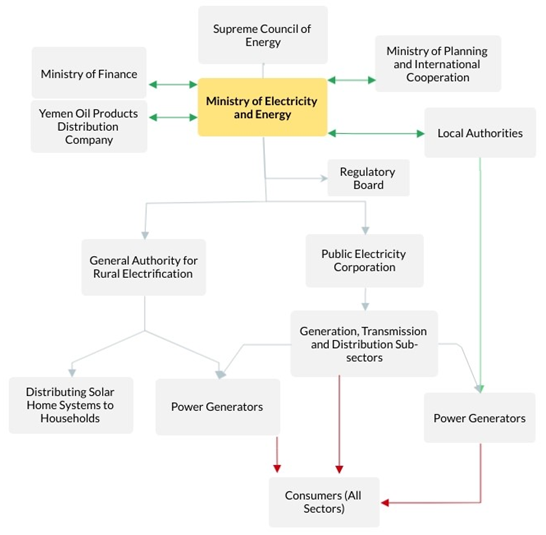
The electricity sector in Yemen is managed by the Ministry of Electricity and Energy (MoEE) which is responsible for setting the sector policies and strategic plans, while the Public Electricity Corporation (PEC) is in charge of electricity provision, managing the electricity sub-sectors of generation, transmission, and distribution. The General Authority of Rural Electrification (GARE), established in 2009, is the body responsible for electrifying specific rural areas that are located outside the main and secondary cities.
The electricity sector activities are governed by Electricity Law No. 1 of 2009. The law stipulated several positive and ambitious measures to reform the sector and improve sector performance, such as unbundling the PEC into three corporate entities – one each for generation, transmission, and distribution – and creating an independent regulator to control sector activities. None of these measures, however, has been achieved to date.

Interrelations Among Key National Stakeholders
Private sector participation in the electricity sector started in 2006 and was limited to electricity generation activities. The PEC purchased the energy from private producers, based on short-term contracts, and supplied them with the fuel needed for generation. The role of the private sector was mainly to back up the PEC in bridging the electricity supply gap. In 2013, the share of purchased energy accounted for around 38 percent of overall generation, while from 2008 to 2012, the average cost of purchased energy represented around 48 percent of sold energy revenues. This indicates that the government – and the power sector in particular – incurred significant financial burdens due to purchased energy from private producers.
Until 2015, the residential sector accounted for most of the country’s electricity consumption, at 65 percent. Given the unreliability of the supply, most of the facilities in the economic sectors, such as commercial and industrial, relied on their own diesel generators as their main source, or as a backup system. In 2012, there were around 2 million subscribers in the electricity sector, and the gap in generation capacity was 376 MW. Due to limited capacity, the unserved energy demand was around 33 percent in 2011 and 25 percent in 2012. Thus, there was a need to disconnect some subscribers at peak times. The electricity tariff was heavily subsidized and was far below the high cost of supply. In 2014, the average cost recovery rate was only 33 percent (as per local market fuel prices).
The Marib I & II gas-fired power plant projects, as well as electricity interconnection projects with neighboring countries, are strategic components of the generation subsector. The Marib I gas power plant was installed in 2009 in Safer, near the gas field, supplying around 50 percent of all Yemen’s generated energy and 40 percent of its actual installed capacity (340 MW). The plant played a crucial role in enhancing generation capacity using the least-cost and locally available resources.
As a second phase, the construction of the 400 MW Marib II began in 2013, with plans to start generation in late 2014. There was also a plan to expand the capacity of Marib I & II by converting them from open-cycle gas turbines to combined cycles. Due to political unrest, the second phase was suspended. Interconnection projects with neighboring countries, namely Saudi Arabia and, via Djibouti, Ethiopia, were under discussion. These projects, however, did not materialize.
Worthy of note, too, is the country’s attempts to utilize renewable energy technologies. Yemen is endowed with significant renewable energy resources, specifically wind, solar and geothermal. Yet, although the National Strategy for Renewable Energy of 2009 set a target of 15 percent renewable energies in the generation mix by 2020, the deployment of renewable energy applications before the war was minimal. The first large-scale wind farm project, of 60 MW, was to be installed in Al-Mokha, funded by several international institutions. Again, due to the war, this project has been suspended.
Prior to the war, the installed generation capacity of the electricity sector was significantly low, at 1.5 gigawatts (GW), with the actual capacity only 67 percent of this. The main reason for this low capacity was that most of the key power plants were aging and inefficient. Electricity generation was improving steadily, however, up until 2010, with the 340 MW Marib I gas power plant mentioned above the most recent strategic project. In addition to the limited available generation capacity, losses were substantial, exceeding 40 percent in 2013. This energy loss, combined with a low bill collection rate, a significant tariff subsidy, and the purchase of electricity from expensive sources, were major issues bleeding the sector.
In terms of annual electricity consumption per capita, in 2014, this stood at 255 kWh/year. This was extremely low compared to the regional and international level, where the amounts are 2,900 kWh/year and 3,100 kWh/year, respectively. Due to stunted improvement in electricity expansion, the access rate to public electricity in 2014 was around 40 percent of the population. Furthermore, although the rural areas host around 75 percent of the Yemeni population, the electrification rate in those districts was extremely low, at 23 percent, compared to 85 percent in urban areas.
During the current war, the public electricity sector has been substantially affected by the ongoing armed conflict, suffering considerable physical and non-physical damage. The conflict and the absence of reliable infrastructure have also negatively affected the provision of other basic services, such as health, water, and education. Indeed, it is estimated[1] that during the ongoing war, about 90 percent of the population has not had access to public electricity. In 2020, only 50 percent of health facilities were functioning and they remain negatively affected by power outages up until today[2]. While around 32 percent (303 MW out of 906 MW) of the available capacity of the power plants previously connected to the national grid are still functioning, given the collapse of the grid, those power plants mainly supply local demand.
There is also a divergence between those areas controlled by the internationally recognized government and those controlled by the armed Houthi movement (Ansar Allah), in terms of electricity supply. In the former, supply has remained largely the same; the government-led supply and tariff remain subsidized, with significant reliance on purchased electricity from private producers, and with sporadic fuel grants and support from Saudi Arabia and UAE to address the limited fuel supply. In Houthi -controlled areas, electricity generation has changed to private-led supply. Several private grids are currently providing electricity through small generators.
Since the collapse of the national grid, the solar photovoltaic (PV) market has also boomed at an unprecedented rate, becoming an attainable electricity alternative. This is especially so in the northern and central governorates, where national power plants are not functioning and the price of private electricity is unaffordable for most. In December 2019, around 75 percent of the population used small solar systems as the main source of electricity.
Despite the deteriorating situation in the power sector, especially since the start of the current war, there is an opportunity to build a stronger electricity sector in Yemen.
The following section includes priorities for restoring and reforming that sector. The applicability of these recommendations, however, relies on a highly supportive political environment and the support of international donors/lenders, as well as effective management by sector leaders.
The recommendations below are timed for the current situation and the first year following any potential peace agreement and/or political stability. The aim at this stage is to restore the sector to its previous capacity before the war and prepare a sound foundation for the reform process that must follow the initial recovery phase. The following steps are therefore recommended:
These recommendations are applicable during the two- to five-year period following any potential peace agreement and/or political stability. This stage focuses mainly on reforming the sector in accordance with the relevant steps taken before the war and best international practices.
In general, the success of the reform process – especially the restructuring of the sector, the creation of an independent regulator, and the degree of private sector engagement – needs a political commitment translated into an enforceable decree for reform. High-level leaders, supported by a committee of senior experts, should work on initiating, supervising, and directing the reform process so that it obtains stakeholder consensus and ensures smooth reforms leading to the establishment of a modern electricity sector.
There are a considerable number of important laws and regulations, drafted and/or adapted before the war, that need to be enforced. The reform process can thus build on previous efforts, as well as develop new laws and decrees, to better govern the sector. The following steps are therefore recommended:
The Electricity Law of 2009 included the main necessary steps for reforming the structure of the electricity sector. The following points emphasize the importance of enforcing the electricity law, as well as supplementary recommendations:
Enhancing the capacity of institutions and individuals is key to improving the sector’s performance. Thus, the following steps should be taken:
Perhaps counterintuitively, countries during a conflict or in a post-conflict transition phase have many investment opportunities, usually centered on the provision of unmet basic services and needs. The private sector can play an important role in infrastructure and economic reconstruction, which in turn results in several positive outcomes, such as an increase in private capital and job creation while (re)building local capacities and skills. The private sector also generates revenue for the government by paying taxes and other fees. Therefore, the following measures are recommended:
Several technical recommendations are needed to improve the electricity services and their quality. The top technical priorities to enhance the performance of the generation, distribution, and transmission sectors are:
Even before the events of 2014 and 2015 that led Yemen into the ongoing civil war, its economy was fragile. The years of hardship that have haunted the country ever since have been devastating. Yemen is now rated as one of the hardest places in the world for businesses to operate and is last or near last in a host of global business competitiveness indexes. From January 25-27,2021 the seventh Development Champions Forum, held virtually, focused on this dire national situation. To help address local economic challenges, the Development Champions discussed the possibility of establishing Local Economic Councils. According to their analysis, between the existing community-level local development committees (which guide targeted, small scale infrastructure investment from development funds such as the Social Fund for Development and the World Bank) and the Supreme Economic Council (which guides sector-led state investment at a national level), a space exists for a governorate-level body to drive development by guiding investment to serve local needs and strengthen ties between the governorates and the private sector.
Even before the events of 2014 and 2015 that led Yemen into the ongoing civil war, its economy was fragile.[1] The years of hardship that have haunted the country ever since have been devastating. Yemen is now rated as one of the hardest places in the world for businesses to operate[2] and is last or near last in a host of global business competitiveness indexes.[3] On a national level, stressors have included the interruption of oil and gas exports, suspension of donor development support and drop in remittances.[4] In addition, there has been a bifurcation of monetary policy and financial regulation between rival central banks, a general shortage of foreign currency in the market to finance imports, a major depreciation in domestic currency value that has eroded local purchasing power, and widespread loss of livelihoods and income.[5] Damage to vital infrastructure has also been widespread and public finances are in disarray.[6]
The devastating results of this economic collapse cannot be overstated. Poverty and hunger are rife.[7] According to UNICEF,[8] “Yemen is the largest humanitarian crisis in the world, with more than 24 million people – some 80 per cent of the population – in need of humanitarian assistance, including more than 12 million children.”
The Development Champions (DCs) are senior Yemeni experts and professionals from various backgrounds, with established expertise in development and economy. The seventh Development Champions Forum (DCF7), held virtually on January 25-27, 2021, discussed how within this clearly dire national situation, businesses still operating in Yemen today face considerable local-level challenges. The forum considered challenges both unique to, and shared by, the country’s various governorates,[9] regarding areas such as vital infrastructure. Roads, power, fuel supplies, water, and access to communications across the country are often either below standard or not functioning at all.[10] Issues raised also included: a lack of skilled workforces and training opportunities; governorates’ lack of decision-making powers required to react to their specific circumstances; inadequate oversight of funds available to invest in local economies; and scarcity of microfinance opportunities.[11]
Yemen’s local authorities are, for the most part, weak clients of the central authority,[12] and require more resources to cover local development needs.[13] The implementation of the Local Authority Law in 2000 devolved responsibility for providing local services to the district-level local councils within each governorate, to be paid for by revenues generated through taxation. Economic collapse and lack of access to national wealth generated by oil and gas sales has left the councils in many cases unable to fund basic services required by their populations, let alone stimulate economic development.[14] Measuresagreed upon in the National Dialogue Conference to strengthen the autonomy of governorates and their local councils are still waiting to be implemented.[15]
As a possible solution , the Development Champions discussed the idea of a possible establishment of Local Economic Councils (LECs)that. According to their analysis, between the existing community-level local development committees (LDCs) (which guide targeted, small scale infrastructure investment from development funds such as the Social Fund for Development (SDF) and the World Bank)[16] and the Supreme Economic Council (which guides sector-led state investment at a national level),[17] a space exists for a governorate-level body to drive development by guiding investment to serve local needs and strengthen ties between the governorates and the private sector.
The LECs, as envisioned by the Development Champions, would comprise experts drawn from the private sector, academia, NGOs and local authorities, who would both assess the real needs of the governorate’s economy, and advise the local governor and relevant local offices on how best to address them.
Amongst others, the LECs could work on plans to improve local productivity in areas of priority in the governorate and will have to market their ideas to donors and the private sector to facilitate and mobilize funding to reach those in need. Unlike the LDCs, which are project-based temporary structures, LECs would focus on future development plans and implementation at the governorate level.
For example, if access to finance is found to be a major productivity barrier that needs to be addressed in a given governorate, the relevant LEC would advocate for extending microfinance services to the governorate. The LEC could target microfinance stakeholders such as the SFD, Yemen Microfinance Network, microfinance institutions and donors, with needs assessments, studies and presentations and a clear message that facilitating microfinance in the governorate is feasible and a priority.
LECs would also be well placed to better facilitate private-sector bids for large-scale operations currently under the purview of the central government, such as power production and waste management, which could open the door for more significant investments.
Creating these credible, transparent bodies that could present a clear economic vision for their areas would also provide a more appealing environment for international donors looking to sponsor development projects, train workforces and distribute aid.
The Development Champions stand ready to support in drafting clear legal mandates for the implementation of the LECS. Both the nature of the mandates and the structure of each LEC should be flexible, decided by the local authorities depending on their needs. Once formed, the day-to-day running of the LECS should be left to their members.
Located in the east of the country, Hadramawt (population 1.7 million officially, and 3 million anecdotally[18]) is geographically the largest governorate in the Republic of Yemen. Its 28 districts cover some 193,000 square kilometers, around 36 percent of Yemen’s landmass. The governorate’s capital, Mukalla, is considered Yemen’s third largest seaport.[19]
Economic activity in Hadramawt is hampered by general insecurity, especially in the valley and desert areas, in addition to specific conflicts between the components of the central authority, local authority and the Southern Transitional Council (STC). However, with the exception of some limited confrontations with Al-Qaeda in the Arabian Peninsula – most notably, the military operations to drive the extremist group out of Mukalla in 2016 – the governorate has not seen major military operations and has thus largely kept its economic infrastructure intact during the war. This leaves the governorate in an excellent position for economic development, if the appropriate policy steps are taken. Its coastline allows access to well-stocked fishing grounds; the governorate is rich in agricultural land with fertile soil and is known for animal husbandry and beekeeping. Hadramawt is rich in minerals, including gold, and the area currently produces some 65 percent of Yemen’s oil.[20]
Hadramawt is a national outlier, enjoying relative stability and comparatively greater economic resources than other governorates in the country. Local government here functions at a much higher level than elsewhere and already has some working relationships with the private sector.[21] As a result of the weakened power of the central government, Hadramawt has since 2015 exercised a reasonable degree of autonomy. The governorate takes a share from oil export revenues as well as from local financial resources. Compared to other governorates, Hadramawt’s infrastructure was not damaged by the fighting and enjoys a reasonable degree of security and stability.[22]
A Hadramawt LEC comprising members of the private sector, academia, NGOs and local government would be well placed to create locally focused initiatives and economic partnerships that would stimulate growth. For example, the governorate has a well-established fishing industry but without investment it is unable to be exploited to its full potential. Similar to national trends, many fishers still use small artisanal vessels, which are inefficient, and only moderate landing and storage infrastructure exists.[23]
Fisheries interventions in Yemen prior to 2015, of which Hadramawt was a part, came in the form of policy support to improve efficiency of the domestic and export marketing of fish and in the form of infrastructure support, such as the construction of fish-handling facilities, fish-receiving stations, engine maintenance, and net-repair facilities. In addition, efforts were made regarding capacity building for the fishermen in the areas of marine engineering navigation and fish-processing technology and for government fisheries personnel.[24] However, these projects were limited and there have been no studies regarding their sustainability. The LEC could coordinate and advise development partners on existing as well as future interventions, based on consultations with the Yemeni Seafood Exporters Association (YSEA)[25] and the local fisheries’ associations in Hadramawt.
Meanwhile, the LEC could advocate for bringing further microfinance into the governorate, which would help fishers invest in more modern boats, improve landing stations and establish a broad ecosystem of related businesses, such as fish farms, canning factories, boat builders and deep-sea fishing companies.[26]
In addition, DCF7 found that poor catch quality, poor hygiene standards and a lack of quality management systems within fishing companies were affecting productivity.[27] Assistance is needed in improving the quality of fishing and exporting practices based on international requirements, as well as awareness and monitoring campaigns to insure against overfishing. A close partnership with INGOs, facilitated by an LEC, could also help to introduce new fish-based food products, which would create local business, as well as help to mitigate malnutrition at the national level.
Similarly, an LEC could help facilitate targeted investment in Hadramawt’s agricultural sector to help with the significant problems currently caused by a lack of energy and fuel. For example, DCF7 members suggested that an investment fund of around 10-30 million United States dollar (US$) would help farmers move from diesel to solar power and increase productivity.[28]
In the event of smaller-scale successful outcomes, the LEC could further guide the governorate to work with the private sector to develop more investments that entail major infrastructure improvements. For example, DCF7 members suggested LECs could investigate the merits of establishing an oil refinery or expanding export facilities to allow for exploitation of the governorate’s mineral resources.[29] In the longer term, the council could guide the governorate to invest strategically in education, ensuring an educated workforce capable of staffing the governorate’s nascent industries and elevating them to higher levels.
Taiz, located 256 kilometers south of the national capital, Sana’a, is Yemen’s most populous governorate. With an estimated 3.5 million[30] to 5 million[31] people, the area holds about half of the population currently living under the control of the internationally recognized Yemeni government.[32]
Any economic activity in Taiz must overcome extreme challenges. The governorate is one of the worst affected by the ongoing war, having been an active frontline in the conflict throughout the war. Six of its 23 districts are currently held by the armed Houthi movement (Ansar Allah).[33] Its eponymous principal city has seen the second highest proportion of damage of all Yemeni cities, according to the World Bank’s 2020 assessment, and suffers from a suffocating siege that has been in place for more than five years. The city ranks second worst for functioning services in the country, has suffered the worst damage to housing stock of any city in Yemen, has seen significant damage to its medical infrastructure and has no public access to electricity and very little public access to water.[34] More than 80 percent of the governorate is food insecure.[35]
The Taiz districts with large manufacturing plants and industry are controlled by the de facto Houthi authorities. Additionally, the coastal districts, although liberated, are still under the influence of the United Arab Emirates. Military interference in the coastal districts is limiting the effectiveness of the fishing sector.[36] Consequently, investment momentum is nearly suspended. Internal sources of investment are insignificant and, since 2015, all sources of external funding have dried up.[37]
The DCF7 believes that economic rejuvenation in Taiz will be limited without a peaceful solution to the fighting and the unification of its authorities under the state. However, the DCF7 has called the economic environment in Taiz “encouraging despite the current blockade and war,” given the adaptability and resilience shown by the businesses still in operation, and called for “urgent intervention in the field of commerce” to assist them.
With the right investment and opportunity, the DCF7 suggests that Taiz would be able to exploit diverse resources and bolster economic activity, with a focus on agriculture, livestock, fishing, and the manufacturing of, for instance, paint and foodstuffs.
The World Bank estimates that between US$44.5 million and US$54.5 million is required for the full rehabilitation of Taiz city.[38] An LEC would be well-placed to ascertain the most suitable sectors to target and the most efficient methods with which to do so.
Exploring channels for adequate financial resources to build suitable infrastructure would be a key directive for an LEC in Taiz, as would facilitating economic partnerships with the private sector in order to achieve an economic boost, especially in sectors with untapped capacities – such as industry, fisheries and mineral wealth.[39]
For instance, improvements in transportation infrastructure would help reduce the current high prices of goods and rehabilitation of power infrastructure would be crucial to drive down the crippling cost of electricity. An LEC would be well placed to guide investment into small-scale initiatives that would reap tangible benefits for local producers. For example, microfinance arrangements to allow the governorate’s farmers and other businesses access to solar power would be of great benefit, as would schemes to help reopen small factories and support artisanal producers.[40]
A transparent, integrated LEC could also help restore trust in the local authorities, which, according to the World Bank,[41] have been eroded over recent years, particularly regarding long-standing issues over garbage collection and sewers. Such issues might be alleviated with private-public partnerships.
In the continuing absence of steps to empower governorates and their local councils, as recommended by the 2013-2014 National Dialogue Conference,[42] the DCs propose that emergency measures be taken to create a mandate for LECs. The central authority should create a legal framework – informed by the proposals of an independent legal consultant – to allow for the creation of LECs in each governorate; it should then validate their mandate. If, or when, the NDC recommendations eventually become law, the LECs could be absorbed into the structure of the local councils, perhaps as economic advisory committees. In order to establish the credibility of the LECs as a viable concept, the DCs recommend a three-year trial phase in which councils are implemented in two governorates.
The work of the LECs will be greatly aided if their governorates have funds to invest in development. The existing system does not encourage governorates to effectively collect funds, and any money available is redistributed without sufficient awareness of each governorate’s needs.[43] At the DCF7, the governor of Taiz suggested that centrally collected funds should be redistributed in a more practical manner, whereby the poorer governorates receive a more generous contribution. Delegates also called for budget caps on autonomous spending – currently set at YR50 million – to be lifted, to allow governorates more flexibility to develop their own infrastructures as they see fit.
The political divisions of the center are reflected on the governorate level, with appointments often politicized. The LECs must remain apolitical if they are to succeed in gaining the trust, and thus investment, of a wary private sector. Many private investors are ready to support projects, but they fear that projects will be shut down centrally.
Endnotes
Yemen is one of the most water-scarce countries in the world, with renewable water resources currently capable of providing only 75 m3 per capita per year – well below the water scarcity threshold. And this volume is steadily dropping. The agricultural sector in Yemen is the dominant user of groundwater resources, accounting for around 90 percent of total consumption. Due to the current crisis, fuel required for pumps has become scarce and very expensive; as a result, solar energy has begun to play a role in the extraction and supply of groundwater for irrigation. However, there is concern about the misuse of this new technology. This study examines the current trend of solar-powered irrigation system (SPIS) use in Sana’a Basin, identifying the pros and cons of this approach. It presents the perspectives of farmers and experts in terms of what is happening and what should be done to maximize the benefits and minimize the negative impacts of SPIS. The incidence of SPIS installation is increasing at a rate of more than 4 percent annually. Farmers spoken to as a part of this study expressed enthusiasm to use SPIS and cited capital cost as the biggest obstacle to their acquiring this technology. This paper proposes governance and policy recommendations for overall water management and, in particular, for future studies and regulation of SPIS-driven groundwater use. Setting appropriate policies for water-pumping powered by renewable energy will help to conserve groundwater sources and sustainably preserve livelihoods
Yemen has experienced unrest for many years, suffering from civil conflicts, wars, a deteriorating economy and severe depletion of water resources.[1] The country’s aridity, limited water resources, and the mismanagement and overexploitation of water contribute to Yemen’s water insecurity. The current war has had a significant impact on water use and the performance of the water and irrigation sectors.[2] Ongoing instability in the country has had negative impacts on the availability of fuel and electricity – energy sources that have typically been used to extract and transport groundwater. As a result of the increased scarcity of electricity and fuel, water resources have been harder to access and water services have become less reliable. Solar energy has started to play a role in providing water to different users, including farmers, who rely to a large extent on groundwater for their agricultural activities. Going beyond generalities, this paper looks in detail at the current uses and potential impact of solar-powered irrigation systems (SPIS) on the sustainability of the use of Yemen’s scarce water.
This study focuses on Sana’a Basin, where the shortage of water is among the most problematic. Of all global national capitals, Sana’a has often been identified as the one most likely to run out of water first.[3] It is important to remember that the hydrology of Yemen varies considerably and therefore findings about Sana’a cannot be assumed to be valid for other basins and regions. However, there are some principles and recommendations of a general nature that are valid across the country. Strategies and detailed policies must, of course, be specific to each basin and region.
None of the official authorities and their related policies/strategies, including the Ministry of Electricity and Energy (MEE), the Ministry of Water and Environment (MWE) and the Ministry of Agriculture, Irrigation and Fisheries (MAIF), have addressed the issues associated with the use of solar energy in Yemen.[4] There are a few studies about solar energy for domestic use,[5] but these have little bearing on the technology’s use for agricultural water extraction. A 2019 UNDP report, the only study so far to discuss the use of SPIS in Yemen, determined the positive advantages of SPIS and promoted its use, but said little about the possible impact of SPIS on groundwater sources.[6]
One of the main issues in water management in Yemen is the considerable groundwater over-extraction, which threatens the viability of life in many parts of the country, as water availability diminishes. One of the problems faced by planners is the complete absence of policies and regulations for the management of new solar energy technologies used for water extraction, but they must also contend with the absence of detailed analysis based on actual field data for SPIS. This paper contributes to reducing this gap. If the over-extraction issue remains unaddressed, the further deterioration of water availability will make life in parts of the country more challenging, if not impossible. With the growing demand for SPIS in Yemen – and given its ability to provide affordable, clean-energy solutions – this paper aims to propose recommendations for governance and donor/financer approaches to the recognition and regulation of SPIS-driven groundwater use.
There are 29 million Yemenis, 70 percent of whom live in rural areas and more than 50 percent of whom depend on agriculture. Yemen has no lakes or permanent rivers: rainfall and groundwater are the main sources of water in the country. Agriculture is estimated to use 90 percent of groundwater resources in Yemen, even though it only generates less than 20 percent of GDP.[7]
Yemen suffers from extreme water scarcity. Per capita water availability has dropped steadily in past decades as known available resources have remained static or have diminished while the population has increased. The annual volume of renewable water per capita declined from 221 m3 in 1992 to 80 m3 in 2014 and to only 75 m3 in 2017;[8] the latter is just over one percent of the global per capita average (5,925 m3) and 14 percent of the Middle East and North Africa region per capita average (554 m3). Yemen’s trajectory over the past three decades suggests available renewable water per capita could drop to 55 m3 by 2030.
According to the internationally recognized Falkenmark indicator, absolute water scarcity occurs if per capita water availability falls below 500 m3 per annum. That is almost seven times the current water availability in Yemen. Since the beginning of this century, Yemen has been using annually one third more water than its renewable supply can support: in 2010, extraction was 3.5 billion cubic meters (bcm) while renewable supply was 2.1 bcm; the 1.4 bcm shortfall was met by water pumped with modern technology from non-renewable fossil aquifers.[9] The groundwater tables have dropped severely, leaving the country in a state of extreme scarcity. For example, in Sana’a Basin, the water table was at a depth of 30 m in the 1970s but had dropped to between 200 and 1200 m by 2012.
There are three main reasons for water scarcity in Yemen. First, rapid population growth, averaging 3 percent per annum, has increased demand thus reducing per capita water over generations. Second, the introduction of diesel-operated pumps and tube well-drilling technology in the past century for irrigation has affected the use of traditional rainwater harvesting systems and enabled extraction of groundwater significantly above recharge levels. This has led to the expansion of agriculture areas and the depletion of aquifers. Third, climate change is manifested through increasingly violent and irregular downpours and other phenomena affecting water availability. These irregular rainfall patterns have further reduced replenishment of aquifers, as the loss of top soil prevents absorption of flows, particularly where terraces and traditional spate systems have deteriorated due to lack of maintenance.[10]
The irrigated area in Yemen has increased from 37,000 hectares (ha) in the 1970s to more than 400,000 ha in the 2000s. During the same period, as irrigated areas increased 11-fold, the area supporting rain-fed agriculture declined by 30 percent.[11] Among the most striking cases of unsustainable water management is the situation in Sana’a Basin, where water resources serve the country’s rapidly growing capital city and high value crops such as qat and grapes. Water extraction there is estimated at five times recharge levels.[12] A further example is that of fruit production in the Tihama: in the middle of Wadi Zabid, a major area for banana cultivation, the irrigated area increased from 20 ha in 1980 to 3,500 ha in 2000. The number of drilling wells increased by more than five times between 1987 and 2008, from about 2,421 to 12,339 wells.[13]
Water management policies and related national institutions have been weak. Farmers with extensive landholdings and powerful social connections have more, and unregulated, access to the resource than small landholders. Following years of benign neglect, the National Water Resources Authority (NWRA) was established in 1995. Officially, NWRA has full authority of water policy development and implementation but, so far, it has been unable to address the complex social and political issues involved in water management.
In July 2002, Law No. 33 of 2002 – known as the “Water Law” – was promulgated. It was amended by Law No. 41 of 2006, but its by-laws were only issued in 2011, demonstrating the intensity of the debate around its implementation. This delay took place despite the fact that the newly created MWE had lost control of agriculture, the most water-intensive sector, in 2003, when the irrigation sector was removed from its authority within weeks of the ministry’s creation and returned to MAIF, the institutional base for large landowners and foreign-financed irrigation development projects.
In 2005, with support from the World Bank and other funders in the water sector, mainly Germany and the Netherlands, the National Water Sector Strategy and Investment Program (NWSSIP) was announced. It was updated in 2008 and contains impressive proposed investments, few of which ever materialized. In January 2011, a Presidential National Conference on Management and Development of Water Resources in Yemen was held, producing a worthy statement of intent. The feasibility of these proposals was never put to the test as the conference was soon followed by the national uprisings and, later in the year, the political transition. NWSSIP, while addressing renewable sources such as rainfall and rainwater harvesting, says nothing about the use of solar energy for water. A further update was made in 2014, though it was not approved by the cabinet due to the political crisis.
In 2013, the total capacity of the national electric grid in Yemen was 1,535 megawatts (MW); 699 MW derived from diesel, 495 MW from steam and 341 MW from gas power plants.[14] The country’s energy needs for lighting alone is estimated at 112 percent of the total generated energy.[15] More than 50 percent of Yemen’s population lack access to the national grid, and the remaining portion experiences frequent power outages.[16] Yemen’s energy policy has largely been focused on diesel and gas electricity generation, which supplied cities, leaving most rural areas without any national links. Yemen has high potential for renewable energy sources – namely, solar, wind and geothermal.[17] However, the country still lacks administrative strategies to promote and regulate the use of sustainable energy resources.
Lack of government action to solve the crisis of basic service provision in Yemen continued during the 2011-14 period while politicians were preoccupied with the political transition and short-term urgent priorities. After 2015, the main immediate impact of the conflict on the majority of urban residents was the interruption of electricity and water services. In rural areas, the main initial impact was the destruction of infrastructure, affecting the inward and outward transport of basic necessities, including agricultural inputs and food. The major fuel crisis that started early in the war decreased energy available for water pumping and, as a result, seriously affected the availability of water for urban households and for irrigated agriculture.
Now, while the war is ongoing, the public water network and electricity grid serve no more than 10 percent of families.[18] All sectors, including agricultural, industrial and services, experience significant increases in input costs for irrigation, transportation and marketing, resulting in lower production and exports.[19] Production has stalled, negatively impacting both public and private sectors. The delivery of public goods and services – including health, education and social security – has been affected throughout Yemen.[20] Fuel and cooking gas prices have become unstable; at times, the cost of these commodities has jumped to more than 1,000 percent from a pre-war baseline.
The war has affected water supply all over the country, in terms of availability, accessibility, quality and affordability. Decentralized, community-based water systems have shown more resilience than public, centralized systems; in many areas, people have gone back to using sustainable techniques, like rainwater harvesting. However, it is worth mentioning that the public water sector is one of very few sectors that have continued to provide services, even if these services are reduced, irregular and reach fewer Yemenis than before the crisis.[21]
The increasing availability and financial accessibility of solar power – combined with the years of intermittent and only occasional electricity service in towns, and even less supply in rural areas – has led to solar energy’s expanded use throughout the country during the war. More than 70 percent of households are now using solar energy as their primary source.[22] Newly installed solar panels can be seen on almost every house in Sana’a (figure 1). Simultaneously, and to some extent with the support of humanitarian agencies, the use of solar-powered pumping to access water has developed considerably throughout the country. This is the case for domestic supply and even more so for irrigated agriculture, though the use of solar for the latter has been financed primarily by well owners and operators, and is thus more available to the wealthier segments of society (figure 1).

Figure 1: Newly installed solar panels on Sana’a houses and SPIS at a farm in Sana’a Basin
Before the outbreak of the 2011 protests, a 2009-2020 plan to develop and modernize the electric power infrastructure in Yemen was developed by the Public Electricity Corporation (PEC). The plan proposed to increase electricity production to three times 2009 levels, an increase equivalent to 3 gigawatts (GW), to serve factories and new areas and homes that did not have access to the public network.[23] Due to the unrest, all power plants stopped working completely in 2016.[24] Figure 2 illustrates the planned and actually produced electricity over the plan’s time period. The decline in the production of electrical energy began appearing clearly in 2011.[25] Since the war started, the national network has largely ceased to function, replaced locally by small private networks, primarily powered by household-level solar power, though few have enough storage or capacity to operate equipment with high energy demands, such as.[26]

Figure 2: Strategic Electricity Plan up to Year 2020[27]
Solar energy is an eco-friendly, renewable source but many commentators say that it is a double-edged sword in Yemen.[28] While solar pumps can improve access to water and save energy, they might affect aquifers. During the current fuel crisis, many urban public water authorities have begun to use solar-powered groundwater pumping systems to supply domestic water. Using solar pump systems for drinking water supplies has a significant positive impact on water accessibility and, consequently, health and hygiene. However, the use of solar energy for irrigation might lead to over-abstraction of groundwater and add pressure to already stressed water resources. There are around 100,000 pumps in use in Yemen for irrigation purposes.[29] Replacing diesel and electric powered pumps with SPIS without clear rules and restrictions, particularly on qat farms, could lead to the expansion of the cultivation area and, hence, to an unforeseen increase in groundwater abstraction.
SPIS, once installed, has a relatively low cost per unit of power generated. Having said that, farmers try to maximize their use of groundwater in order to recover the high capital costs of the SPIS – either by expanding their irrigated area or by selling water to other farmers. This could lead to a race to the bottom unless regulations are put in place and enforced. Another concern is the drop in costs of solar panel technology. It dropped from around $76/W in 1977 to $0.30/W in 2015. This continuous drop, coupled with increasing diesel prices, has made this type of technology more attractive not only for farmers but also for many decision-makers, funders and technicians. SPIS is an energy-and-water solution that has as much potential to aggravate the water-scarcity problem as to improve the energy-access problem.[30] However, financial incentives to save energy cannot be applied here to avoid wasteful water use. The risks posed by unregulated solar-powered pumping must be identified and addressed, so as to clearly define policies and regulations to mitigate these risks and incentivize sustainable water use.
Yemen has 14 water basins. This study focuses on Sana’a Basin (figure 3). Sana’a Basin has 22 sub-basins and spans nine administrative districts, including the Yemeni capital, Sana’a city. The basin has an area of 3,240 km2 and hosts a current population of 4 million.[31] This study’s main unit of analysis is farmers from different hydrogeological areas: Bani Husheish, Bani Mater and Hamdan. The climate of Sana’a Basin is arid and mild throughout the year, with average temperature ranges between 12 and 25° C.[32] Mean annual duration of sunshine per day is 9 hours.[33] Annual rainfall typically ranges between 110 and 350 mm, with an average of 240 mm.[34] However, some years have much higher rainfall, above 350 mm.[35] Rainy days range from 8 to 25 days per year and mainly occur in the two rainy seasons: mid-March to beginning of April and mid-July to end of August.[36]
Sana’a Basin relies to a large extent on groundwater for both irrigation and domestic water uses.[37] As a result of rapid population growth in Sana’a city (over 5 percent[38]), uncontrolled immigration and the expansion of agriculture activities, water demand has increased tremendously in the last three decades and new wells continue to be drilled.[39] Today there are more than 13,000 wells in Sana’a Basin. The point of intersection, or balance, between groundwater recharge and abstraction was in 1985, after which groundwater abstraction has kept constantly increasing beyond the basin’s recharge (figure 4).[40] The groundwater aquifers of Sana’a Basin are now suffering over-exploitation. Annual abstraction exceeds 220 million m3, five to six times higher than the volume added through natural recharge, and the water-level decline is about 4-8 m per year.[41] About 90 percent of Sana’a Basin groundwater is used for agricultural activities, with qat and grapes as the most dominant crops.[42]
This study conducted field surveys in December 2020 and January 2021 among a stratified sample of 88 farmers in Sana’a Basin, mainly from Bani Husheish, Bani Mater and Hamdan.[43] The study also undertook key informant interviews (KIIs) with water, irrigation and energy experts to ensure coherence between data at the farmer level and professional- and administrative-level information. This approach facilitated a deeper understanding, from different perspectives, of the future of SPIS, its uses and proper management, in Yemen. After a quality check on the collected data, where needed, participants were contacted by phone to verify unclear or incomplete points.
Sana’a Basin was selected as the study area because it faces water scarcity and has deeper groundwater than other basins; information on the use of SPIS in such a deep basin can be roughly extrapolated to apply to other areas, with the assumption that SPIS use in shallower basins would be easier. However, to cross check, a small sample of data (10 farmers) was collected from Hadramawt, where groundwater depth is <100 m.


Figure 3: Hydrogeological map and cross-section (B-B) of the Sana’a Basin[44]

Figure 4: Groundwater recharge and abstraction in Sana’a Basin[45]
The use of SPIS in Sana’a Basin is dramatically increasing. Today more than 30 percent of farmers in this area are using SPIS (figure 5). This was not the case prior to the current war, when almost all groundwater users in Yemen depended on diesel generators and the electricity grid to pump for irrigation.[46] The early reasons for this shift (2015-2017) were war-related – mainly the lack of electricity in the public network and the scarcity and high price of diesel. Now, and with the growing experience of farmers, the main reason for the shift to solar energy is the lower operation and maintenance costs of SPIS (figure 6) and the fact that it is more reliable than diesel pumps. All users of SPIS report being happy because they can get the quantity of water they used to have and pay almost nothing, bar the capital cost.
![]() |
![]() |
| Figure 5: Sources of energy for irrigation practices (Jan 2021) | Figure 6: Reasons led to SPIS uses (Jan 2021) |
The number of installed SPIS systems is increasing with time. It jumped from 0 percent in 2012 to 12 percent in 2017 to 31 percent by the end of 2020 (figure 7). Likewise, the pumping capacity of SPIS, represented by pumping depth, has witnessed a remarkable development in Sana’a Basin. SPIS use in 2014-2015 was limited to shallow groundwater (<15 m) before increasing to 360 m in 2017 and reaching 500 m in 2020 (figure 8). During the current war and the closure of most Yemeni airports and seaports (particularly in the north), the average uptake of SPIS in Sana’a is increasing by 4.4 percent per year. If this trajectory were to continue, all old pumping systems in Sana’a Basin would be replaced or supported by SPIS within 15 years. If Yemen’s sociopolitical and security situation stabilizes, the conversion to SPIS is predicted to be far quicker; given the experience gained by farmers and the growing solar energy market in Yemen, the country would be expected to witness a complete shift to SPIS within only 7 years.

Figure 7: Accumulative installed SPIS

Figure 8: Installed SPIS, Related Costs & Pumping Depth (2014-2020)
The SPIS installation cost ranges between US$4,000 for shallow groundwater wells and up to US$100,000 for deep groundwater wells (figure 6). The increased depth directly correlates to increased cost; with time, SPIS installation depth and, consequently, costs are increasing. However, the exact relationship between cost and depth is not constant. The quality of the SPIS system (brand and country of origin) and the size (number of solar panels) are also important factors in pricing. Water depth, sun exposure and the system’s efficiency and capacity are the main factors determining pumping capacity. Some farmers said that SPIS secures them water quantities equal to what they used to obtain using other pumps, while other farmers said they obtain even more using SPIS. “Nine hours with the SPIS is equivalent to using a diesel pump from 6 in the early morning until midnight,” a farmer said.

Figure 9: why not SPIS until now?
All owners of wells are willing to use SPIS and the main obstacle for most farmers (69 percent) is the capital cost of SPIS. One farmer regretted the opportunity he lost in 2008, when he was offered a free SPIS and refused it. “I was unaware of its advantages,” he said. In a number of areas in Sana’a Basin, farmers share ownership of the wells and pumps. In these areas, local agreements require everyone to share ownership of wells located within their property. When some have no money to pay their share for drilling the well and installing the pump (mostly diesel and electric pumps), other farmers pay in advance for them. The farmers who jointly own wells report facing difficulties replacing their old pumps with solar ones because they use time-based distribution allocations, which is not fully applicable by SPIS. Whereas diesel pumping produces a constant amount of water, variation in solar radiation means that solar pumping can extract different amounts of water. The possible inequity in water quantities obtained in the time allocated means that some joint owners have doubts about introducing solar pumping. Among all farmers surveyed in Sana’a, 28 percent are unwilling to install SPIS due to these partnership concerns and a small minority (3 percent) were not interested in a new SPIS system because they rarely use their traditional pumping systems (figure 9).
Sandstone and quaternary alluvium areas in Sana’a Basin, such as Bani Husheish, have, for the most part, seen a more drastic increase in SPIS systems as compared with quaternary and tertiary volcanic areas, like Bani Mater. The flat land in Sana’a, such as Bani Husheish, is more fertile than mountainous areas and hosts more rich farmers with qat farms. This significantly helped the spread of solar energy pumps. In Bani Husheish, more than 400 solar pumps had been installed by 2017 (figure 10), approximately 20 percent of the total number of wells in that area.
Among the interviewees there were two farmers using SPIS in both Sana’a and Hudaydah. Although the pumps in Hudaydah cost them less and need shallower pumping depths (30-60 m) than in Sana’a, they are happier with their pumps in Sana’a because the crop there is qat, which is more profitable. The benefits of SPIS in Sana’a outweigh the initial costs because the crops grown there are lucrative. This finding was also supported by the comparative experience of Hadramawt farmers, many of whom have lower financial capacity and have been forced to sell their old pumping systems to cover part of their SPIS costs. In Sana’a, the majority of farmers keep their old diesel/electrical systems and use them as a standby or supplemental system.

Figure 10: Digitizing map of 438 SPIS in Bani Husheish (2017)
As is the case in Sana’a, farmers in Hadramawt prefer SPIS to other pumping systems. The pumping depth in Hadramawt (30-60 m) is more suitable for solar pumps and the use of SPIS has started to spread widely. It is worth mentioning that a number of farmers in Hadramawt have expressed concern about the impact of solar energy technologies on the groundwater levels in the absence of clear regulations and policies. Nevertheless, the Hadrami farmers describe SPIS as a good system with fewer technical problems than electric and diesel systems. The SPIS cost in Hadramawt ranges from US$10,000 to 17,000. The capital cost is the main obstacle preventing most Hadramawt farmers from owning SPIS technology.
The SPIS users in Sana’a and Hadramawt interviewed for this paper received no training on installation, operation or maintenance except a little information about installation from the marketing companies. These users confirmed that they do not have any specific programs or policies to regulate the use of SPIS.
During the current war, farmers have not experienced the kind of drop in groundwater levels experienced before the war.[47] “In the last three years I installed not a single pipe,” one said, indicating that his supply had been sufficient. Long periods of diesel crisis led to a drop in the operating hours of diesel pumps, meaning less water was pumped and, consequently, groundwater resources were under less pressure. Moreover, rainfall in 2019 and 2020 was far higher than usual. “If the rainfall continues as in the last two years we will rarely use groundwater,” a farmer in Sana’a said. SPIS use – while helping to mitigate the challenges posed by the fuel crisis – is not a reason for increased groundwater stability reported by some farmers, primarily because it is still in its early stages. Only 31 percent of surveyed farmers in Sana’a are using these systems. Most of the SPIS adopters are large landholders – those who could have afforded diesel to operate pumps, even in the current fuel crisis.
The diesel crisis is still relevant in early 2021 and many farmers buy diesel on the black market. This study found that the average price of diesel per liter is YR500 and YR325 in Sana’a and Hadramawt respectively.[48] These prices, current as of January 2021, are about five and three times diesel’s pre-crisis price. Since 2011, diesel prices have, at times, reached 15 times their pre-crisis levels. However, with more SPIS systems or increased diesel availability, it is expected that farmers will gradually start to abstract an even greater volume of groundwater than they did in the pre-war period.
Over the course of the conflict, there has been a decline in crop production across the country.[49] The number of qat farms is increasing at the expense of other crops, whose area is diminishing. Wells are being drilled without any involvement of official authorities. “In our area there were more than 200 farmers of crops other than qat; today, there are around 20,” one farmer in Bani Husheish noted. The expansion of qat farms – which, because of the crop’s high water needs, are usually irrigated – increases concerns about the future abstraction of groundwater, especially when Yemen’s situation stabilizes and the availability of SPIS and diesel increases.
There is considerable interest from development actors to support the use of SPIS in Yemen. A number of farmers have already received some support from local organizations (Azal and Al-Wataniah were mentioned by respondents) and international ones (e.g. FAO, IOM, UNDP, CARE, OXFAM and Mercy Corps). Some of these supporting organizations control the maximum depth SPIS can be used for, but this is not always the case. The farmers now know how to get technical support and upgrade these systems. Farmers with large landholdings are able to both buy SPIS systems and access further funds from organizations. Owners of smaller farms face greater barriers to installing SPIS, and some farmers reported that they sold assets like cars and gold in order to buy SPIS. The majority of respondents couldn’t yet afford this technology, although they want it. Solar energy pumps are being promoted and supported by many local and international organizations, on the basis that they save fuel and electricity, protect the environment, reduce CO2 emissions and have health benefits and other social returns. However, there are concerns, mainly from water experts, about the potential impact of SPIS. So far there has been no study in Yemen on what can be done to regulate the use of solar energy, especially in the field of irrigation.
Solar pumps are seen as a potentially powerful solution to government shortcomings in providing electricity grid connections for agriculture. The potential impact of solar pumps on excessive groundwater extraction is generally not seen as a major concern by most policymakers. Farmers are seeing solar pumps as both a pumping and an energy solution. From an economic perspective, any resource that has become easily accessible will inevitably be overexploited, unless access to and use of this resource is restricted through government regulation and policies.
Yemeni energy experts have posited that solar-powered water-pumping might help to conserve groundwater and stabilize water levels, given the time restrictions on pumping (8-10 hours a day) and the limited capacity of these systems. However, no study has systematically assessed these trade-offs. Rather, some studies suggest that the introduction of solar pumps could pose additional risks of over-extraction. The risk that SPIS proliferation is likely to worsen over-exploitation of aquifers is particularly clear given the cautionary tale of historic diesel subsidies, which led to the over-exploitation and dramatic decline of groundwater resources over decades.[50] Increased water wastage has been reported following extensive solar pumping in parts of India and China, for example.[51]
The present study shows that most farmers kept their old pumps to use them at night or when needed. All SPIS owners in Sana’a Basin kept their old pumps (mostly diesel) as standby systems. Others (6 percent) have more than one well and operate both diesel and solar pumping systems. The current users of SPIS rely mainly on solar systems and use diesel pumps only when the SPIS supply is insufficient, mainly during night time in the summer season or on cloudy days. In fact and as mentioned earlier, some farmers have reported abstracting more with SPIS. There is growing evidence that the low operational cost and available energy of SPIS contribute to excessive extraction of groundwater, decreasing water tables and negatively affecting water quality.[52] Yemeni energy experts are supportive of the use of solar energy in all sectors, with their main concern being the quality of imported solar energy equipment, rather than any long-term environmental impact.
Yemeni water and irrigation experts agree and support the use of SPIS in Yemen but in a way that prevents further depletion of scarce groundwater. The use of SPIS minimizes consumption of imported fuel and electricity, alleviates the pressure on the economy (since the Yemeni economy relies, to a large extent, on fuel) and, more importantly, provides a cheaper and ecologically friendlier way of pumping water. This is particularly important in rural areas, where agriculture is the main livelihood option. However, the potential impact of SPIS on groundwater abstraction in the absence of clear policies and regulations cannot be ignored. Therefore, more detailed comprehensive studies on the potential negative impact of SPIS, compared to the traditional fuel-powered systems, are needed.
Although SPIS has limitations of capital cost and pumping time limits, there is still a risk of over-exploitation of groundwater resources associated with the widespread use of SPIS technology, hybrid solar systems and related subsidies. In Morocco, for instance, targeted subsidies for solar pumping have been put on hold due to the government’s growing concern over the depletion of groundwater resources.[53] Another concern is that farmers might irrigate more during the daytime, which lowers irrigation efficiency and water productivity. Most farmers in Yemen are still practicing old methods of flood irrigation and few have modern irrigation systems. These concerns need to be addressed systematically at the community and policy levels, and comprehensive policies and regulations must be prepared. Water experts don’t believe that farmers should be supported with subsidies to cover the capital costs of SPIS, instead advocating for support to be given in the form of technical assistance and capacity building alongside information on sustainable water management.
From the point of view of the farmers surveyed, the main constraints on SPIS expansion include the initial high investment cost, primarily, but also the variable quality of panels, converters and pumps due to the absence of standardization, certification and import controls, worsened in some cases by dishonest dealers.
Food security is a challenge in Yemen. But a focus on that challenge should not come at the expense of the country’s endangered water security. SPIS can increase food production by harnessing reliable and sustainable energy to provide timely irrigation. However, these benefits may be at risk as many technical feasibility studies on SPIS fail to appropriately evaluate available water resources and water use and the arising trade-offs within the water-energy-food nexus (Figure 11). Efforts to achieve food security in Yemen should always be linked with water security. Given the large numbers of rural Yemenis and their dependence on agriculture, ensuring the use of the most appropriate and water-saving irrigation technology is very important. However, activating traditional rainwater harvesting systems and developing rain-fed agriculture are of equal importance, as many areas have insufficient groundwater to enable more than very minimal, supplementary irrigation; other areas have none. The most suitable areas for irrigation using SPIS are those with annual rainfall ranging from 300-400 mm, such as Hajjah and Ibb. In all cases, both the benefit of SPIS and the sustainability of groundwater in the area under study should be considered.

Figure 11. The water energy food nexus with SPIS[54]
Although the findings of this study suggest caution in the use of solar power for irrigation, it should be emphasized that its promotion both for the supply of domestic water and of household electricity is an entirely positive development that should be encouraged. Solar power is, in this way, providing basic services to the population, particularly for thousands of rural households throughout the country who would otherwise not have access to these essential facilities.
With respect to sustainable management of Yemen’s scarce water resources, the main finding of this study is that SPIS requires better regulation and management, alongside other water extraction mechanisms, primarily in agriculture, but also for domestic and other uses. The field data collected for this study demonstrates that the use of SPIS has dramatically increased in the last decade in Yemen. The data also shows that the use of solar energy for irrigation in solar-rich and groundwater-scarce Yemen is likely to adversely affect groundwater resources, in the absence of effectively implemented regulations. In other words, SPIS is yet another mechanism that, unless well managed, could contribute to worsening Yemen’s overall water scarcity. The crucial factor determining SPIS attractiveness for farmers is that the marginal cost of solar-powered pumping is almost negligible once they have made the initial investment.
What is also clear is that the cost of a solar irrigation system increases significantly with the depth of the water table. In the case of Sana’a Basin, where wells are deep, costs for installing SPIS reach up to US$100,000. This method of irrigation therefore increases the gap between poor and rich farmers. Even where water can be reached at lesser depths, the price of SPIS installation is still beyond the means of most smallholders. SPIS is more accessible for the wealthiest farmers – those who own other businesses and/or grow the highest value crops.
Overall, it is important to note that all forms of deep-well irrigation are beyond the means of the majority of smallholders. This has a number of implications. First and foremost, farmers can justify irrigating the highest value crops and, more likely than not, they will expand their qat areas at the expense of cultivating basic food crops, such as sorghum. Second, irrigation costs, alongside other economic pressures, are likely to concentrate land ownership even further, as smallholders are forced to sell their assets, thus gradually worsening social differentiation. Policies focused on reducing inequality need to take these factors into consideration when planning water management.
Sana’a Basin is not the only area where aquifers are now very deep; Sa’ada is another. The risk of unsustainable over-exploitation of aquifers and, ultimately, their exhaustion is high throughout the country. Exhaustion of aquifers means not only an end to agriculture but the end of an area being habitable, ultimately leading to forced migration.
Yemen’s formal legal frameworks on water are not fully implemented and, in any case, fail to address the newly introduced SPIS technologies. All legal frameworks and regulations concerning water and energy must be updated to take into consideration the specificities of solar energy technologies, including the use of SPIS. In the short term, it may be difficult to control technology uptake during the war. It is essential that all SPIS users, including the companies and organizations carrying out SPIS installations, increase their understanding of the fragility of water tables. This involves the development of a massive awareness program, which would help to optimize SPIS use and be a good start toward reducing the over-exploitation of aquifers. However, in the medium and long terms, authorities should regulate SPIS and ensure the safe and sustainable use of water resources in Yemen.
Given the current conflict, a number of the recommendations below will only be applicable once effective government has been restored throughout the country. Meanwhile, those which can be implemented should be done so as soon as practicable.
Endnotes